Introduction: Good Voice, Science Born in the Millimeter
The ultimate mission of the speaker in the hands of consumers is to restore sound. And what determines the success or failure of this mission is the beating heart - the speaker unit. Its birth is not simply the assembly of components, but a precise journey that integrates materials science, mechanical engineering, electronic technology, and subjective art tuning. By understanding this process, one can understand why "careful engineering" is the only shortcut to excellent sound quality.
Chapter 1: Design - Everything Starts with Calculation and Simulation
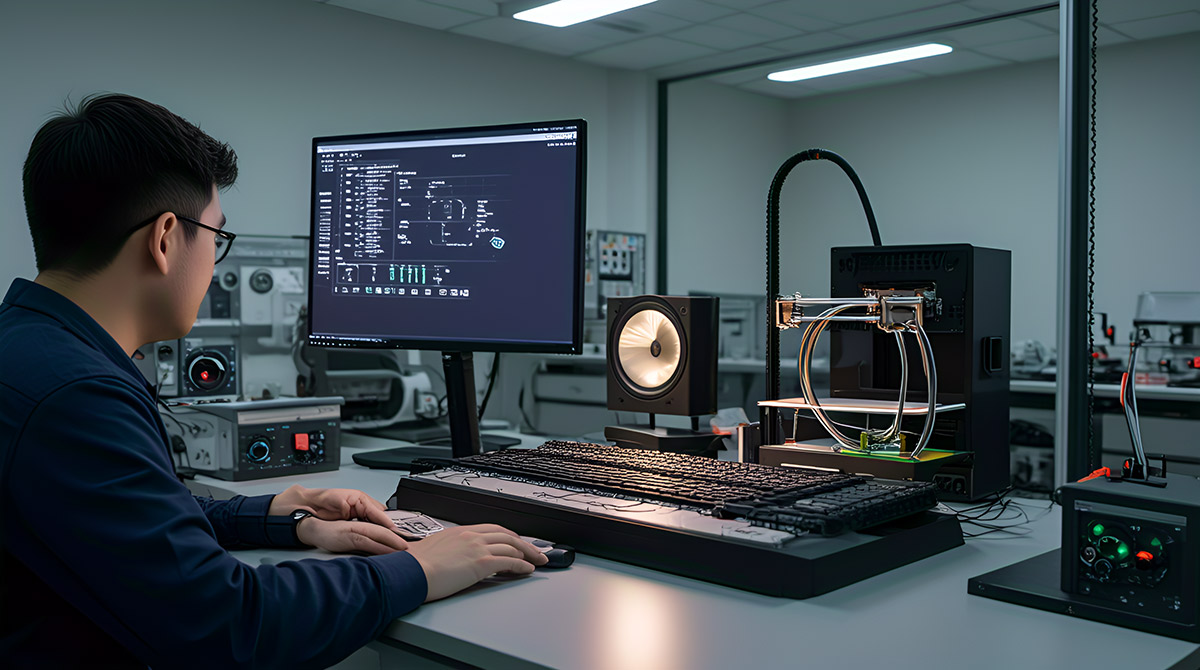
On the blueprint, engineers need to determine the core objectives of the speaker: frequency response range, sensitivity, and distortion. They use computer modeling software to simulate the motion of a vibrating bowl in the air, calculate the magnetic field uniformity of the magnetic circuit system, and design the internal structure of the box to suppress harmful standing waves. For example, high-end brands will design precise waveguides for high-frequency units, whose curvature has been optimized and calculated through millions of CPU hours, just to make high-frequency energy more smoothly and evenly spread to every corner of the room.
Chapter 2: Materials - The Foundation of Science and Art
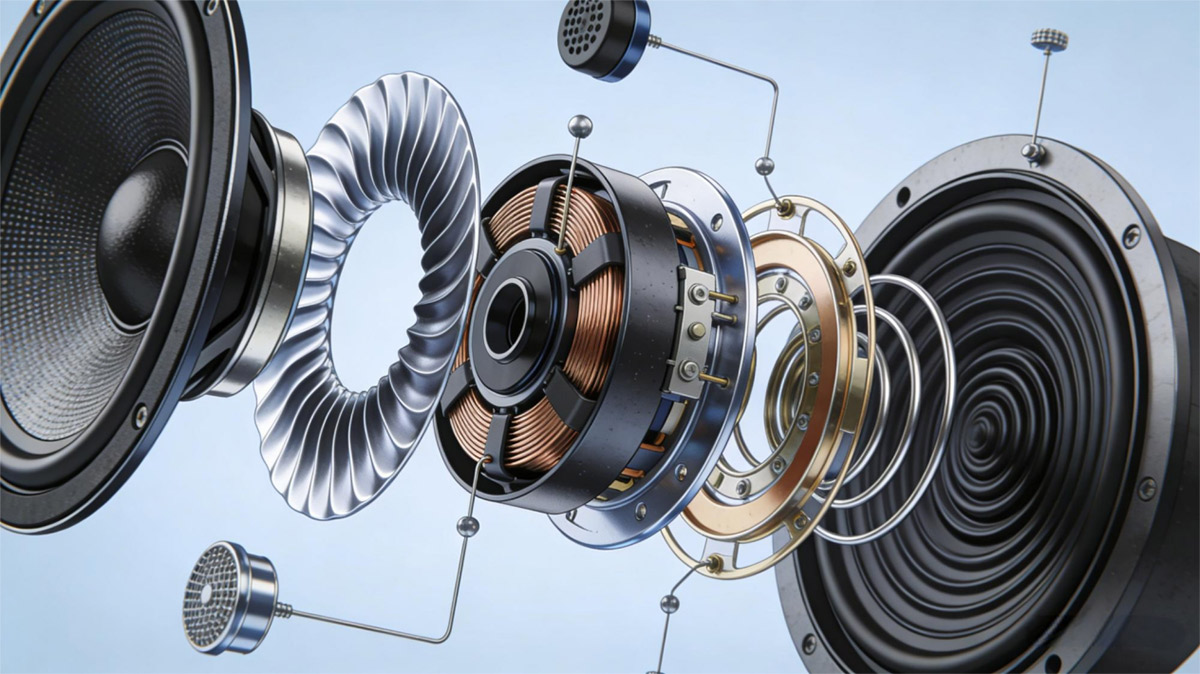
The selection of vibration basin materials is an art of balancing: paper basins are warm and natural, while metal basins (such as aluminum alloys) have fast transient response and strong rigidity. But the handling of materials is more crucial. The BilletCore, which is cut from a solid aluminum billet using CNC technology, can completely avoid the uneven internal stress and micro deformation caused by traditional stamping processes, ensuring that the BilletCore moves accurately like an ideal "piston" and minimizes distortion. Similarly, the strength of the magnet, the purity of the voice coil wire, and the smoothness of the hanging edge material, every detail deeply affects the final sound personality.
Chapter 3: Manufacturing - The Dance of Precision Machinery
The manufacturing phase is a rigorous test of putting design into reality. Taking the core bonding process as an example, the bonding between the diaphragm and the voice coil, as well as the hanging edge and the basin frame, requires the use of micro dispensing technology to ensure precise glue volume to 0.001 milliliters and repeatability exceeding 99% in high-speed automated production. Any small deviation in adhesive can lead to uneven quality distribution and cause additional distortion. The manufacturing of splitters (responsible for distributing signals from different frequency bands to corresponding units) is equally crucial. Some brands even make their own printed circuit boards and special inductors to capacitors, and use pure copper materials several times higher than industry standards to achieve lossless transmission of signal paths.
Chapter 4: Calibration - The Ultimate Resonance between Technology and Aesthetics
The hardware assembly is complete, only the 'physical calibration' has been completed. The true soul infusion comes from the repeated listening and debugging of acoustic engineers in the soundproof room. They will use professional equipment to measure the frequency response curve, but the final decision is still based on human ears. Engineers will fine tune the parameters within the DSP (Digital Signal Processor) for different types of music, which may be a slight increase or decrease in a certain frequency band, making the dialogue more magnetic and the strings more lustrous. There is no absolute standard for this process, it concerns the brand's understanding and adherence to sound aesthetics.
DIPAOER's Practice: Making Precision Manufacturing a Trustworthy Commitment

At DIPAOER, we regard this' birth diary 'as the fundamental belief of our product. We are well aware that whether it is the unit in a video player that requires clear dialogue and powerful bass, or the driver system in a party speaker that requires strong and durable performance, its outstanding performance comes from the meticulous attention to detail in every aspect mentioned above. We may not include "CNC aluminum vibration bowl" as a standard for all products, but we promise to apply the most reasonable precision engineering thinking that matches it in every price range, infusing the concept of "careful engineering" into the entire process from material selection to tuning. Because what we deliver is not parts, but a carefully crafted and trustworthy auditory experience.


Copyright © Guangzhou Xinyang Electronic Technology Development Co., Ltd. All Rights Reserved. 粤ICP备2025507395号 Sitemap XML DIPAOER